
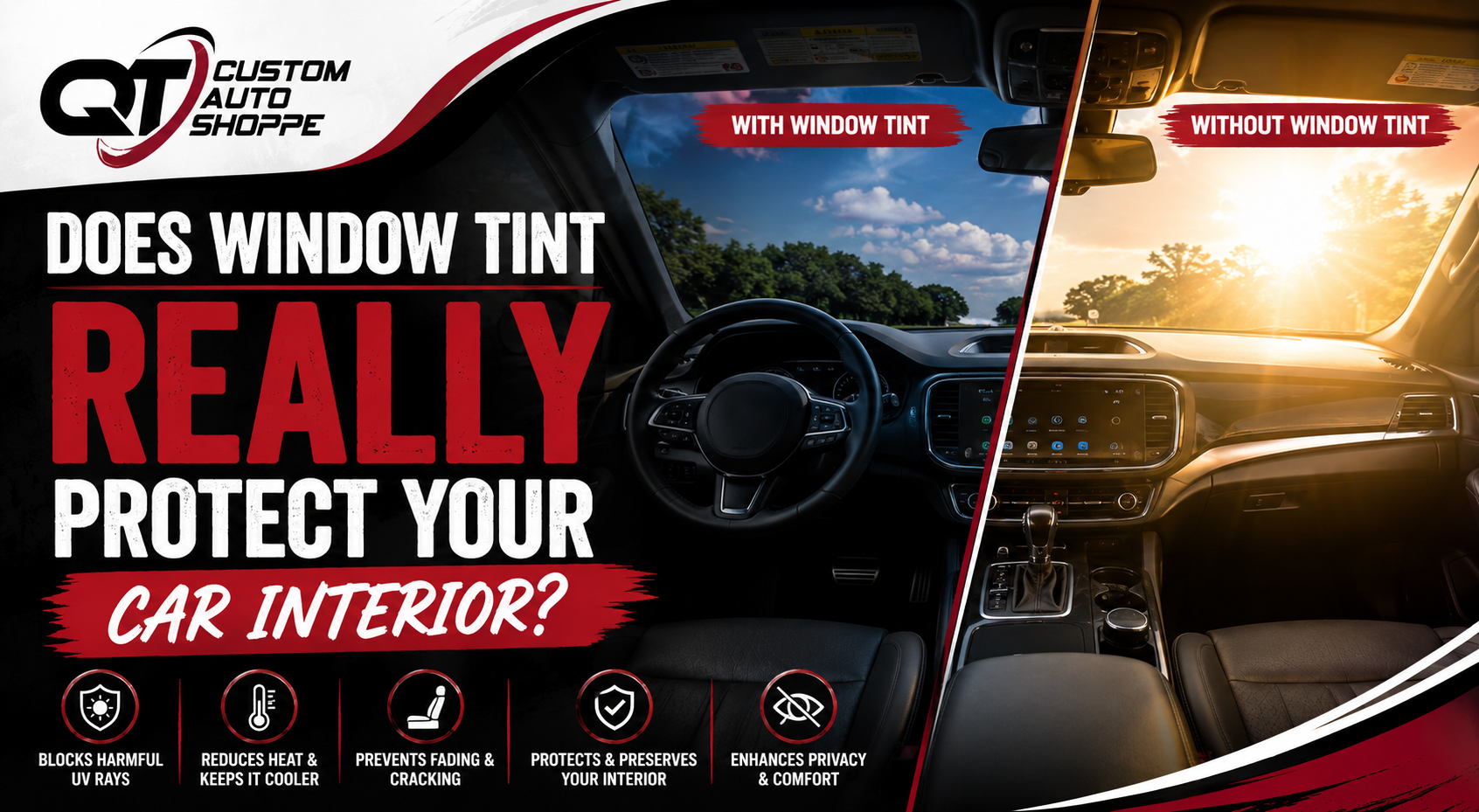
Does Window Tint Protect Your Car Interior?
Most people don’t think about window tint until they get into a car that feels like a heat box after sitting in the sun. You grab the steering wheel and instantly pull your hand back. The seats are hot, the dashboard is hot, and the AC takes forever to cool things down.
Harsh sunlight doesn’t just make the cabin uncomfortable; it also slowly damages the interior. Over time, constant heat and UV exposure can fade seats, dry out leather, crack dashboards, and wear down surfaces much faster than expected.
That’s why so many vehicle owners ask: Does window tint protect your car interior? This blog provides the answer.
How Sunlight Damages Your Car Interior
Sunlight may not seem harmful at first, but daily UV exposure slowly wears down interior materials.
When a vehicle sits outside regularly, sunlight enters through the windows and starts heating every surface inside the cabin. Dashboards, leather seats, door panels, and steering wheels all absorb that heat.
Eventually, drivers may start noticing:
- Fading upholstery
- Cracked dashboards
- Dry leather seats
- Warped trim pieces
- Discolored interior panels
Vehicles parked outside every day usually experience interior wear much faster than garage-kept vehicles. One of the big reasons car owners opt for car window tint protection is to protect their expensive interiors from damage.
What is Window Tint and How Does It Work?
Window tint is a thin protective film applied directly to vehicle glass. Different tint films are designed to reduce sunlight, glare, heat, and UV rays entering the cabin.
Some films mainly improve appearance, while premium options focus more on heat rejection and UV protection.
Modern automotive window tinting technology works by filtering solar energy before it enters the vehicle. Depending on the film type, tint can block a large percentage of harmful ultraviolet rays and infrared heat.
That’s one reason drivers ask: Does window tint protect your car interior during hot summers and long-term sun exposure? Quality film helps reduce the stress sunlight places on interior surfaces every day.
Main Ways Window Tint Protects Your Car Interior
Reduces Harmful UV Exposure
One of the biggest advantages of quality tint is UV protection.
Many premium films block up to 99% of harmful ultraviolet rays. Those UV rays are one of the main reasons dashboards crack, leather dries out, and fabrics start fading. Without protection, sunlight slowly breaks down interior materials every day.
This is one of the biggest benefits of window tint because it helps reduce long-term interior wear that can become expensive to repair later.
Prevents Dashboard and Upholstery Fading
Sunlight doesn’t only create heat. It also causes colors to fade over time.
Drivers often notice fading first on:
- Dashboard surfaces
- Leather seats
- Cloth upholstery
- Door panels
- Steering wheels
Darker interiors, especially, tend to show sun damage more quickly. Good tint helps reduce direct sunlight exposure inside the cabin, which can help preserve interior materials longer. That added car window tint protection becomes especially helpful for vehicles parked outdoors most of the day.
Helps Prevent Cracking and Warping
Heat buildup inside a parked vehicle can become intense during the summer months. Over time, repeated heating and cooling cycles put stress on plastic, vinyl, and leather surfaces. That stress may eventually lead to:
- Dashboard cracks
- Warped trim
- Peeling materials
- Brittle leather surfaces
Reducing direct heat exposure helps lower the risk of that damage developing early.
Lowers Interior Heat Buildup
One of the most noticeable differences after tint installation is cabin temperature.
Vehicles without tint trap heat quickly, especially during hot afternoons. Premium films help reduce the amount of solar heat entering through the glass.
That means:
- Cooler seats
- Lower dashboard temperatures
- More comfortable driving
- Less strain on the AC system
Drivers looking into Window tinting in Woodbridge VA, often choose ceramic or carbon films for their heat-rejection performance in humid summer weather.
Additional Benefits of Window Tint
Improved Driving Comfort
Driving with less glare can make the road feel more comfortable, especially during sunrise, sunset, or bright afternoon conditions. Tint can help reduce eye strain and make long drives feel easier overall.
Among the many benefits of window tint, improved comfort is something drivers usually notice quickly after installation.
Better Energy Efficiency
A cooler interior means your air conditioning system doesn’t have to work as hard to keep the cabin comfortable.
That may slightly improve efficiency during hot weather, especially for drivers spending long hours on the road.
Increased Privacy and Security
Tint also adds privacy by making it harder for people outside the vehicle to see inside.
Many drivers like the added security of keeping valuables less visible while parked.
Enhanced Vehicle Appearance
Appearance still matters. A professionally tinted vehicle often looks cleaner and more finished than an untinted vehicle.
Many customers searching for Car window tinting Woodbridge services initially come in for appearance upgrades and later realize how many useful benefits it also provides.
Does Every Window Tint Offer the Same Protection?
Not all tint films perform the same way.
Basic dyed films are usually more affordable, but they may not block as much heat as premium options. Higher-end films like carbon and ceramic tint provide stronger heat rejection and better UV protection.
Film quality, installation quality, and warranty coverage all matter when choosing tint.
This is why understanding the real benefits of window tint is important before simply choosing the cheapest option available.
Lower-quality film may fade, bubble, or lose effectiveness much sooner.
Is Window Tint Legal?
Yes, window tint is legal, but the laws vary by state.
Each state has regulations regarding:
- Darkness levels
- Reflectivity
- Windshield tint limits
- Front side window visibility
Drivers should always make sure their tint complies with local regulations before installation.
Professional installers usually help customers choose legal tint percentages for their area.
How Long Does Window Tint Last?
The lifespan of a window tint depends mostly on the film quality and installation. Basic films may last only a few years before fading or peeling, while premium ceramic films can last 10 years or longer with proper care.
A professionally installed tint job usually lasts much longer than inexpensive DIY kits. That durability is among the chief benefits of window tint that make it worth the investment.
Is Window Tint Worth It for Interior Protection?
For many drivers, yes.
Replacing cracked dashboards, faded upholstery, or damaged leather seats can quickly become expensive. Quality tint helps reduce the sunlight and heat that cause much of that wear over time.
Drivers who spend a lot of time parked outside often notice the biggest difference after tint installation.
When people ask if window tint protects your car interior, the answer usually comes down to long-term exposure. The more sunlight your vehicle sees, the more valuable tint protection becomes.
Why Choose Quality Tire for Window Tinting?
At Quality Tire, drivers can choose from professional-grade tint options designed for appearance, comfort, heat reduction, and long-term durability.
Proper installation matters just as much as film quality. A clean installation helps prevent air bubbles, peeling edges, uneven application, and premature fading.
The team helps drivers choose tint options based on their vehicle and driving habits.
Bottom Line
Window tint does much more than improve the way a vehicle looks. It helps reduce UV exposure, lower interior heat, and slow fading, cracking, and wear caused by prolonged sunlight exposure.
For drivers wondering, does window tint protect your car interior? The answer is yes, especially when quality film is professionally installed.
Want to Enjoy the Benefits of Window Tinting?
At Quality Tires, we provide premium window tint options designed to protect your car interiors from heat and sun damage. Enhance the comfort, appearance, and privacy of your vehicle, along with lasting interior protection.
Contact us at (703) 491-9005 today to speak to our team about tint options.
FAQ’s
Does window tint really prevent interior fading?
Yes. Quality tint helps block harmful UV rays that contribute to fading dashboards, upholstery, leather seats, and trim pieces.
How much heat can window tint reduce inside a car?
Premium films can noticeably reduce heat buildup by blocking infrared heat and solar energy entering through the windows.
What is the best window tint for UV protection?
Ceramic tint is usually considered one of the best options for UV and heat protection because it blocks high levels of solar energy without interfering with electronics.
Will window tint help protect leather seats?
Yes. Tint helps reduce UV exposure and heat, which can help prevent leather from drying out, cracking, or fading prematurely.
How long does automotive window tint last?
High-quality professionally installed tint can last 10 years or longer, depending on the film type and maintenance.
Is ceramic tint worth the extra cost?
For many drivers, yes. Ceramic tint provides excellent heat rejection, strong UV protection, and long-term durability.
Can window tint improve fuel efficiency?
Indirectly, yes. By helping keep the cabin cooler, tint may reduce how hard the air conditioning system has to work during hot weather.