
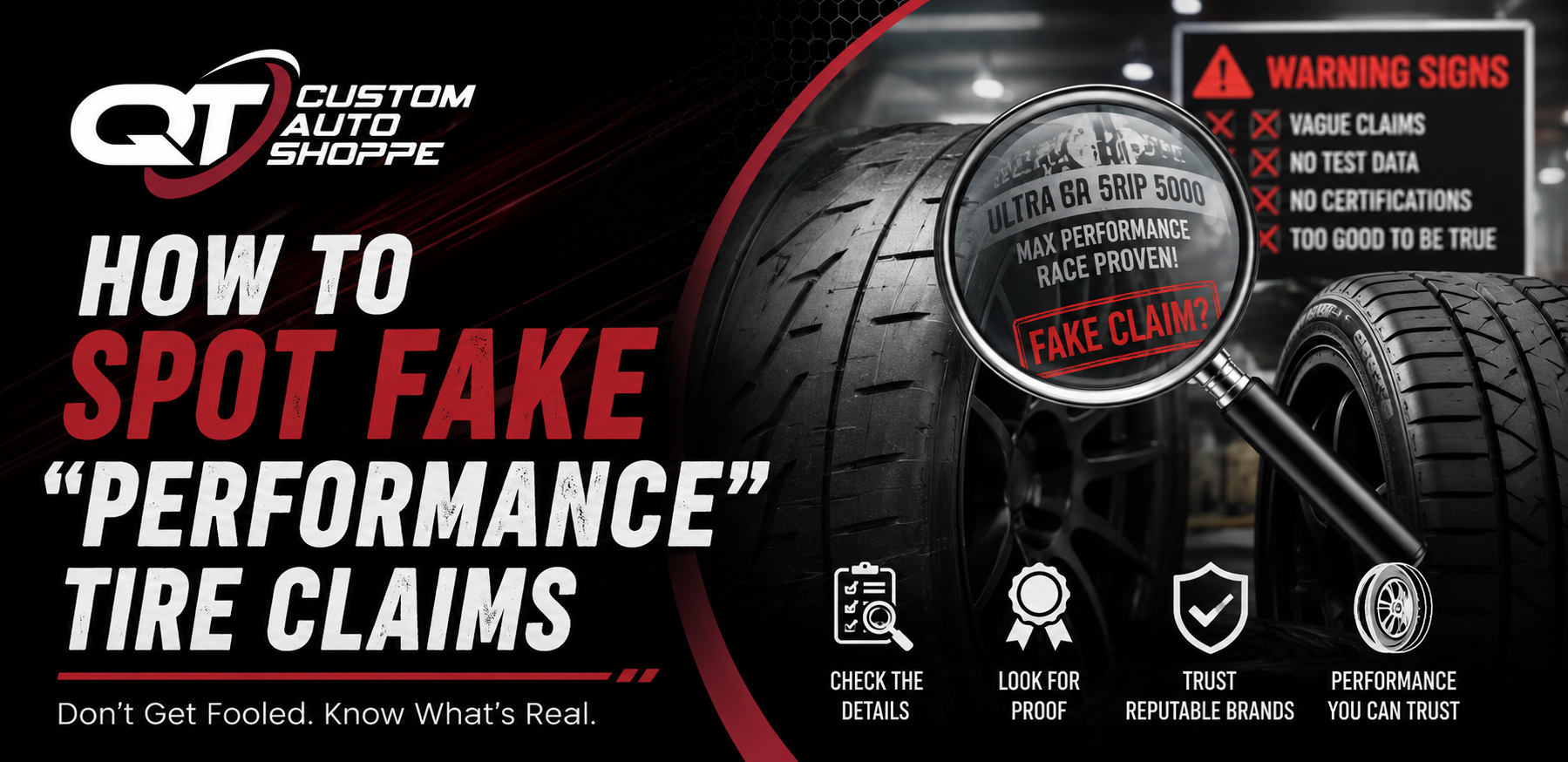
How To Spot Fake “Performance” Tire Claims
Buying tires today isn’t as simple as it once was. There are so many brands, categories, and a lot more claims. Every product seems to promise better grip, sharper handling, or improved control.
At first glance, it all sounds convincing. But if you look a little closer, not all of those claims hold up.
This is where many buyers run into trouble. Fake performance tires are becoming more common, and they don’t always look suspicious. Some appear well-designed and professionally marketed. The difference only becomes clear when you start checking the details.
This article covers how to spot fake performance tires, understand misleading performance tire claims, and make better choices when buying tires.
What Does “Performance” Mean in Tires?
The term “performance” gets used a lot, sometimes too loosely. Performance tires are designed to improve grip, handling, and responsiveness at higher speeds. They use softer rubber compounds and specific tread patterns to increase traction.
Not every tire labelled as performance meets these standards. Some manufacturers use the term as a marketing tool rather than a technical description. That’s where confusion begins, and where fake performance tires start to blend in.
Why Misleading Performance Claims Are So Common
Marketing vs Actual Capability
Marketing focuses on strong, appealing language. Words like high-performance, ultra grip, or advanced control are used to attract attention. The problem is that these terms are not always backed by real data.
When performance tire claims are based more on language than on measurable results, it becomes difficult to separate genuine products from exaggerated ones.
Limited Consumer Awareness
Most people don’t spend time learning about tire specifications. Tires are not something people research regularly. Because of this, buyers rely on brand names or pricing instead of technical details.
This gap in knowledge makes it easier for fake performance tires to go unnoticed. If you don’t know what to check, everything can look similar.
Pricing Strategies That Mislead
Price can also create confusion. Some fake performance tires are sold at low prices to attract buyers quickly. Others are priced higher to appear premium.
In both cases, the price does not always reflect the actual quality. This underlines the importance of looking beyond cost and focusing on specifications.
7 Signs That a Performance Tire Claim May Not Be Genuine
Vague or Overstated Descriptions
If the product description relies heavily on general phrases without explaining actual features, it’s a warning sign. Statements like “maximum performance” or “ultimate grip” sound good, but they don’t provide useful information.
Genuine performance tire claims include measurable data.
No Clear Speed Rating
Every tire should have a speed rating that shows the maximum speed it can safely handle. If this detail is missing or unclear, it raises concerns.
Reliable performance tires always include this information.
Extremely Low Pricing
Very low prices can indicate lower-quality materials or limited testing. While affordability is not always a problem, unusually cheap products deserve closer inspection.
Fake performance tires fall into this category.
Unknown or Unverified Brands
If a brand has no clear history, website, or customer feedback, it becomes harder to trust. New brands are not always unreliable, but a complete lack of information is a risk factor.
No Independent Reviews
Trusted products are tested or reviewed by third parties. If you cannot find any independent feedback, it becomes difficult to confirm the claims.
Sometimes, the absence of reviews is itself a warning sign.
Generic Tread Design
Tread patterns are designed for specific purposes. If a tire has a basic or repeated design across multiple products, it may not be built for performance.
Misleading Labels or Certifications
Some tires display symbols or certifications that look official but are not recognized. This can mislead buyers unfamiliar with industry standards.
This is a common tactic used in fake performance tires.
How To Verify Genuine Performance Tires
Check Speed Rating and Load Index
Start with basic specifications. The speed rating and load index provide important information about the tire’s capability. Without these details, it is difficult to confirm performance.
Review UTQG Ratings
The UTQG (Uniform Tire Quality Grading) system measures treadwear, traction, and temperature resistance. While it does not cover everything, it offers a structured way to compare products.
Research the Manufacturer
Take time to check the brand’s background. Established manufacturers provide consistent product information, testing data, and customer support.
This step alone can help you avoid many fake performance tires.
Read Customer Feedback
Customer reviews can reveal patterns. If multiple users mention poor grip, fast wear, or noise issues, it is worth considering.
Compare With Known Models
Comparing a tire with well-known models in the same category can highlight differences. This is the most practical way to evaluate quality.
If you are unsure how to identify good tires, this comparison method provides clarity.
Performance Tire vs Regular Tire: Key Differences
Grip and Handling
Performance tires are built for better traction and control during cornering or high-speed driving. Regular tires focus on stability and everyday use.
Durability and Lifespan
Performance tires wear out faster because of their softer rubber compounds. Regular tires are designed to last longer under normal driving conditions.
Ride Comfort
Regular tires provide a smoother ride. Performance tires may feel firmer on uneven roads.
Fuel Efficiency
Performance tires can reduce fuel efficiency due to higher rolling resistance. While the difference may not be large, it is noticeable over time.
Common Misunderstandings About Performance Tires
Expensive Means High Performance
Not all expensive tires are performance-focused. Some are designed for comfort, durability, or noise reduction. Price alone does not define a category.
Performance Tires Last Longer
In reality, they wear out faster. The softer materials used for better grip reduce lifespan.
They Are Necessary for Daily Driving
Most daily driving conditions do not require performance tires. Standard tires are more practical for regular use.
Understanding how to identify good tires depends on your driving habits, not only marketing labels.
Conclusion
Spotting fake performance tires is not as difficult as it may seem. It requires attention to detail and a willingness to look beyond marketing language. By checking specifications, reading reviews, and researching brands, you can make more informed decisions.
Misleading performance tire claims can appear convincing when presented professionally. Small gaps in information reveal the truth. Once you recognize these patterns, it becomes easier to avoid poor-quality products.
When browsing different types of performance tires, a little research can make a significant difference. Whether you are upgrading your vehicle or exploring options like custom rims and tires in Woodbridge, VA, taking a careful approach can help you choose the right product.
Seek Expert Advice for Dependable Tires
If you are looking for honest advice, Quality Tire Custom Auto Shoppe is ready to help. Our team focuses on genuine products and practical solutions for every vehicle. Whether you need guidance or installation, we provide reliable service you can trust. Call (703) 491-9005 to speak with professionals who value quality, safety, and long-term performance.
FAQs
How can I tell if a tire is truly a performance tire?
Check for a clear speed rating, proper tread design, and UTQG rating. Also, review brand credibility and customer feedback. Avoid relying only on marketing terms when evaluating tire performance.
Are cheap performance tires worth buying?
Low-cost options can sometimes compromise quality. It is important to verify specifications, reviews, and brand reliability before purchasing. Cheap tires may not always deliver expected performance or safety.
What is the most important rating for performance tires?
The speed rating is essential because it indicates safe operating limits. UTQG ratings help understand traction, wear, and heat resistance across different driving conditions.
Can fake performance tires affect safety?
Yes, they can reduce grip, increase braking distance, and wear unevenly. This can pose safety risks in wet conditions or during high-speed driving.
Do performance tires wear out faster?
Yes, they wear faster due to softer rubber compounds. This design improves grip but reduces lifespan compared to regular tires designed for durability.
Is it okay to use performance tires for daily driving?
It is possible, but not always necessary. Performance tires may reduce comfort and wear out more quickly, making regular tires a better option for everyday driving needs.
Which brands are known for genuine performance tires?
Well-established brands with proven testing and consistent customer feedback are more reliable. It is best to choose manufacturers with a strong reputation and transparent product information.
What does UTQG rating mean in tires?
UTQG stands for Uniform Tire Quality Grading. It evaluates treadwear, traction, and temperature resistance, helping buyers compare tires using standardized performance criteria instead of marketing claims.