
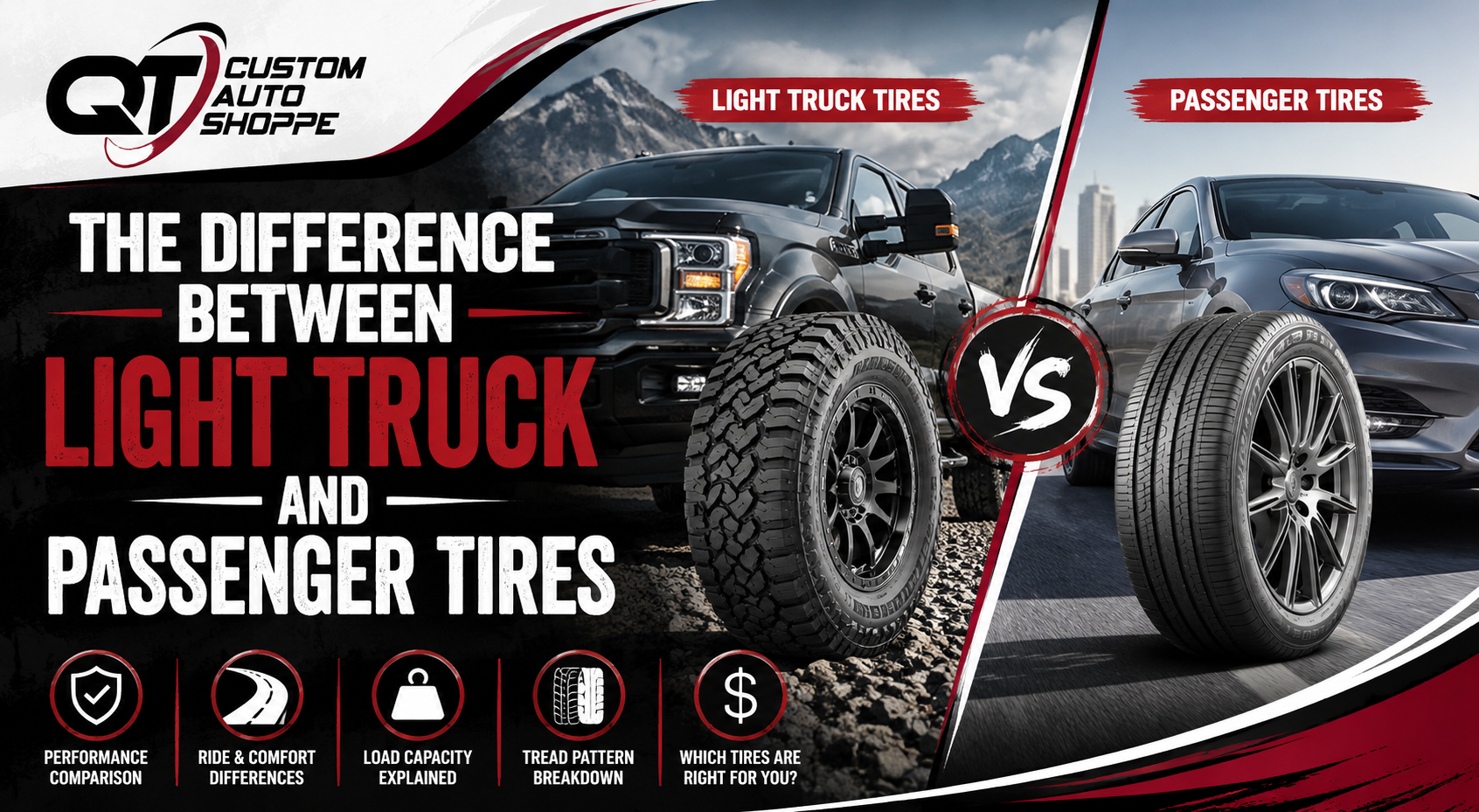
The Difference Between Light Truck and Passenger Tires
Picking out new tires might seem easy, but the actual process can sometimes feel daunting. Suddenly, you’re hearing terms like “LT,” “P-metric,” load range, and sidewall strength, while trying to figure out which option actually makes sense for your vehicle.
A lot of drivers assume tires are basically interchangeable as long as the size fits the wheel. But once you start comparing them, the differences become pretty obvious. Tires built for daily commuting are designed very differently from tyres made for towing, hauling, or rougher driving conditions.
Someone who mainly drives on highways and around town will usually want something different from a driver who tows trailers every weekend. That’s why understanding the difference between these tire categories matters before buying a new set.
This blog explores the key differences between light-truck and passenger tires.
What are Light Trucks and Passenger Tires?
In the simplest terms, passenger tires are designed for comfort and regular road driving, while truck tires are designed for heavier-duty use.
Most sedans, crossovers, and smaller SUVs come with passenger tires from the factory because they offer a smoother ride and better fuel economy.
Meanwhile, pickups and larger SUVs often use light-truck tires because they’re built to support heavier loads and withstand tougher driving conditions.
Passenger Tires
Passenger tires are built mainly for normal day-to-day driving. They’re made for commuting, errands, road trips, and highway travel. Comfort is usually the top priority.
Key Features
Passenger tires typically use softer rubber compounds and lighter construction than truck tires. That softer design helps absorb bumps and keeps the ride quieter on pavement.
Drivers usually notice:
- Better ride comfort
- Less road noise
- Easier steering feel
- Better fuel economy
- Smoother highway handling
For everyday driving, they’re usually the more comfortable option.
Common Use Cases
Passenger tires are commonly used on:
- Sedans
- Crossovers
- Minivans
- Small SUVs
- Daily commuter vehicles
If most of your driving happens on paved roads, this category is usually the best fit.
Types of Passenger Tires
There are several types of passenger tires, each designed for different driving conditions. Some are built for year-round driving, while others prioritize performance or winter traction.
Common options include:
- All-season tires.
- Touring tires.
- Summer tires.
- Performance tires.
- Winter tires.
Most drivers in the U.S. choose all-season tires because they work reasonably well in different weather conditions throughout the year.
Light Truck Tires
Truck tires are built differently from regular passenger tires. The sidewalls are stronger, the construction is heavier, and the materials are built to withstand more stress. That’s why light truck tires are commonly used on pickups, towing vehicles, work vans, and larger SUVs.
Key Features
The biggest difference with LT tires is strength. These tires are designed to carry more weight and handle tougher driving conditions without wearing out as quickly.
Drivers often choose them because they provide:
- Higher load capacity
- Better towing support
- Stronger sidewalls
- Improved durability
- Better puncture resistance
The downside is that they may occasionally feel stiffer under normal driving conditions.
Common Use Cases
Light truck tires are often used for:
- Pickup trucks
- Heavy SUVs
- Towing trailers
- Work vehicles
- Off-road driving
If a vehicle regularly hauls equipment or trailers, LT tires usually make more sense than standard passenger tires.
Types of Light Truck Tires
There are different styles of light truck tires depending on how the vehicle is driven. Some are designed mostly for highway driving, while others are built for dirt roads and rough terrain.
Usual picks include:
- Highway terrain tires
- All-terrain tires
- Mud-terrain tires
- Commercial truck tires
All-terrain tires are especially popular because they balance road comfort with off-road capability.
Key Difference Between LT and Passenger Tires
When drivers compare LT vs P tires, they’re usually comparing comfort versus strength.
Passenger tires focus more on better driving and fuel economy. LT tires focus more on durability and load support.
Load Capacity
One of the biggest differences is weight support. LT tires are designed for towing and carrying heavier loads.
Passenger tires are not designed for the same pressure. That extra support matters for drivers who regularly tow trailers or haul equipment.
Tire Construction
Truck tires use reinforced sidewalls and stronger internal layers. Passenger tires are softer because ride comfort matters more than heavy-duty performance.
This stronger construction is also why truck tires sometimes feel firmer on the road.
Ride Comfort
Passenger tires usually provide a smoother ride. Because the sidewalls flex more easily, they absorb bumps and rough pavement better. Highway driving generally feels quieter, too.
LT tires may feel rougher, especially on smaller SUVs that don’t really need heavy-duty tires.
Fuel Efficiency
When people compare LT vs. P tires, fuel economy is often a factor in the decision. Passenger tires are lighter, which usually helps improve gas mileage.
Truck tires are heavier and create more rolling resistance, which may slightly lower fuel economy.
Durability and Longevity
During demanding conditions, LT tires usually last longer. They’re built to deal with towing pressure, rough roads, and heavier workloads.
Passenger tires can wear faster if they’re constantly overloaded.
Traction and Performance
Passenger tires usually perform better on highways and city streets because they prioritize comfort and handling.
LT tires tend to perform better during towing, off-road driving, snow, and rough terrain.
Pros and Cons of Passenger Tires
Pros
Passenger tires remain popular because they make everyday driving more comfortable.
- Smoother ride quality
- Quieter highway driving
- Better fuel economy
- Lower replacement costs
- Comfortable handling
For commuting and family driving, they’re usually the better fit.
Cons
Passenger tires are not designed for constant heavy-duty use.
- Lower towing capacity.
- Less sturdiness under heavy loads.
- Reduced off-road capability.
- Faster wear during rough use.
Pros and Cons of Light Truck Tires
Pros
LT tires are built for harder work and rougher conditions.
- Better towing support.
- Stronger construction.
- Higher load capacity.
- Better off-road durability.
- Improved puncture resistance.
Drivers who tow regularly often prefer them because of the added stability.
Cons
- Rougher ride quality
- More road noise
- Slightly lower fuel economy
- Higher replacement costs
For vehicles used mostly for commuting, those drawbacks may not feel necessary.
How to Choose the Right Tire for Your Vehicle
The best tire depends more on driving habits than the vehicle itself.
If your driving mostly involves commuting, road trips, errands, and highway travel, passenger tires are usually the better option because they provide better comfort and fuel efficiency.
If your vehicle regularly handles towing, hauling, work equipment, or rough roads, LT tires are often the smarter long-term investment.
Many drivers upgrading their wheels also ask about Custom rims and tires, since tire choice and wheel size usually go together.
Instead of simply choosing the toughest-looking tire available, it’s usually smarter to focus on how the vehicle is actually used.
Can You Replace Passenger Tires with LT Tires (or Vice Versa)?
Sometimes, yes, but it depends on the vehicle and the manufacturer’s recommendations.
Installing LT tires on a smaller crossover may result in a rougher ride than necessary. Meanwhile, using passenger tires on a truck that regularly tows heavy loads could lead to faster wear and safety concerns.
That’s why many drivers searching for custom rims and tires in Woodbridge, VA, consult professionals before changing their tire setups.
Vehicle weight, towing needs, suspension setup, and factory tire ratings should always be considered before switching tire types.
Bottom Line
There’s no single tire that works best for every driver. The right choice depends on how the vehicle is actually used day to day.
For commuting, family driving, and normal highway travel, passenger tires usually provide the smoother ride, quieter handling, and better fuel economy most people want.
For towing, hauling, off-road driving, and heavier workloads, light truck tires offer the added strength and durability needed for tougher conditions.
Want to Buy Tires That Match Your Driving Habit?
At Quality Tires Custom Auto Shoppe, we offer a wide range of tire options to choose from. Drivers can browse our selection and choose based on comfort, towing performance, durability, and long-term value.
Contact us at (703) 491-9005 to speak to our team and discuss your tire requirements.
FAQ’s
What does “LT” mean on tires?
“LT” stands for Light Truck. These tires are designed for towing, hauling, and heavier-duty driving conditions.
Are LT tires better than passenger tires?
Not always. LT tires are better for towing and heavy-duty use, while passenger tires are usually better for comfort and fuel economy.
Can I use LT tires on a regular car?
Sometimes, but the ride may feel rougher, and fuel economy could decrease.
Do LT tires last longer than passenger tires?
In tougher driving conditions, they often do because they use stronger construction and reinforced materials.
Are LT tires more expensive?
Yes. Their heavier-duty construction usually makes them more expensive than standard passenger tires.
Do LT tires affect fuel economy?
They can slightly lower fuel economy because they are heavier and create more rolling resistance.
Which tires are better for highway driving?
Passenger tires are generally better for highway comfort, quieter driving, and fuel efficiency.
Which tires are best for towing?
For towing trailers or hauling heavier loads, LT tires are usually the safer and more durable option.