
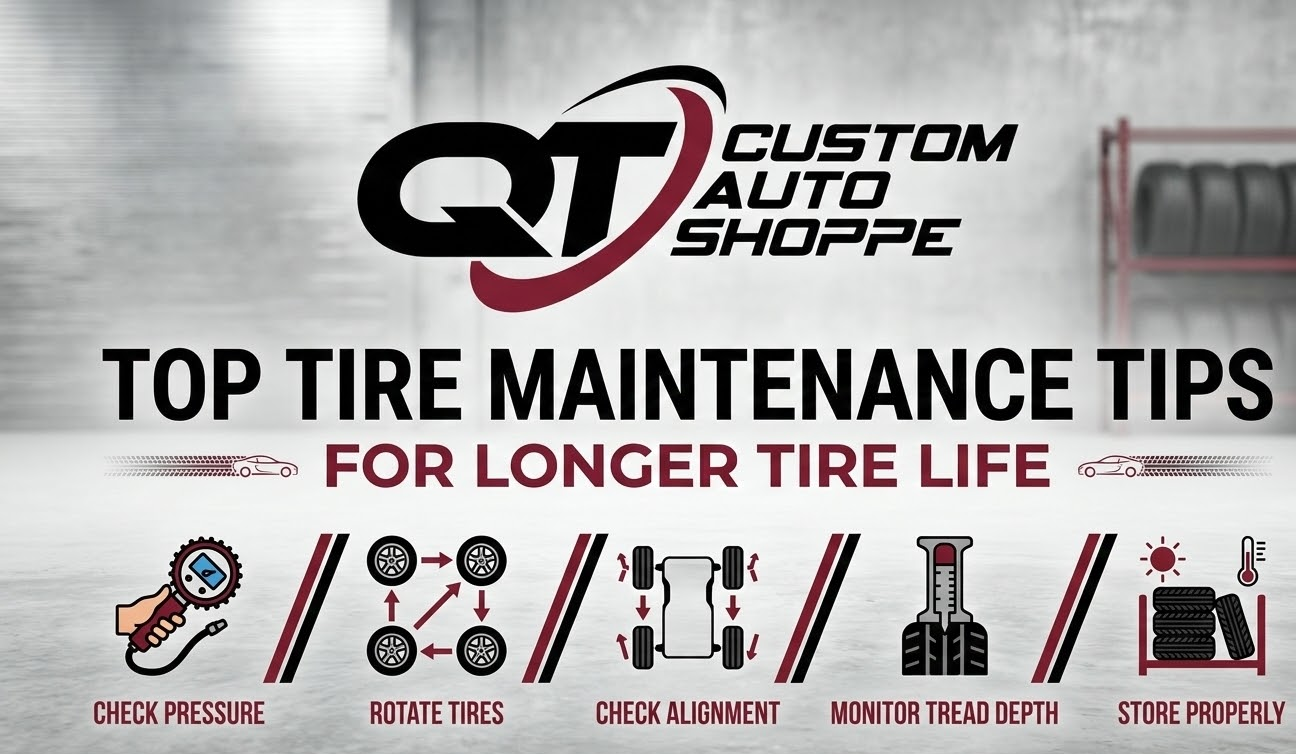
Top 10 Tire Maintenance Tips for Longer Tire Life
Tires are generally not something that garners much attention unless something goes wrong. A slow leak, uneven wear, or that annoying vibration in the steering wheel are all issues that drivers wish to avoid. But till then, tires are happy to carry their load, grip the road in rain or blistering heat, and endure the constant friction of driving.
Tire wear is just part of owning a vehicle, right? You buy a set, drive for a few years, and eventually replace them. That is true to a point. Still, there are some habits drivers can get into that will greatly extend the life of their vehicle, and they only take a few minutes.
Following practical tire maintenance tips matters more than people realize. Here are 10 habits drivers can adopt to help extend the life of their vehicle.
Why Tire Maintenance Matters
Safety First
Tires are the only points of contact between your vehicle and the road. When your tires are worn unevenly or are running at too low a pressure, it affects your ability to stop or turn.
While most drivers are aware of this when driving in adverse conditions, it is something to be taken seriously.
Regular attention keeps those risks under control.
Save Money
Replacing tires too soon can get expensive. A full set often costs hundreds of dollars. Poor inflation, skipped rotations, or alignment problems may cut tire life nearly in half.
Simple tire maintenance tips help extend tire life and stretch the value of every set you purchase.
Performance & Comfort
Well-maintained tires simply make driving feel better. The car tracks straight, vibrations stay minimal, and fuel efficiency stays consistent.
It is a small detail that quietly improves the entire driving experience.
Tip #1: Check Tire Pressure Regularly
This one sounds obvious, yet many drivers forget about it for months.
Air pressure changes naturally with temperature. A cold morning can lower pressure more than you might expect. Underinflated tires flex more as they roll, which causes heat buildup and uneven wear along the edges.
A quick monthly check solves most of these issues. Many gas stations have gauges, though a small digital gauge in your glove compartment is usually more reliable.
Following tire maintenance tips like this one may seem simple, but consistent pressure checks play a big role in tire longevity.
Tip #2: Rotate Tires Every 5,000–7,000 Miles
Not all tires wear at the same rate. Front tires handle steering and much of the braking, which means they usually wear out faster.
Rotating them spreads that wear across all four positions.
A regular tire rotation schedule keeps tread depth more even and helps prevent one pair from wearing out long before the others. Many drivers combine oil changes with rotations just to make the timing easier to remember.
It is a small routine that quietly helps extend tire life without much effort.
Tip #3: Maintain Proper Wheel Alignment
If a car drifts slightly left or right while driving straight, alignment might be off. Sometimes the change is subtle. You may not notice it until uneven wear appears on the inside or outside edges of the tire.
Alignment issues often come from everyday events: potholes, curbs, rough roads.
A quick alignment adjustment restores proper angles, so the tires roll evenly rather than dragging slightly sideways across the pavement.
Tip #4: Balance Your Tires
Unbalanced tires usually reveal themselves through vibration, especially at highway speeds. Drivers sometimes assume it is a suspension problem, though tire balance is often the real cause.
Balancing distributes weight evenly around the wheel and tire assembly. Without it, certain spots hit the road harder during each rotation.
Those small impacts gradually wear the tread unevenly. Regular balancing keeps that from happening and is often included in professional tire maintenance tips recommended by technicians.
Tip #5: Inspect Tread Depth Frequently
Tread depth determines how well a tire grips wet roads. When it becomes too shallow, water cannot channel away effectively, and traction drops.
A quick visual check works, though many people still use the classic coin test. If most of the tread covers the coin, the tire likely still has usable life left.
Regular inspections help catch uneven wear early. Sometimes the pattern itself tells a story about alignment or inflation issues.
Tip #6: Avoid Overloading Your Vehicle
Every tire has a load rating. Exceeding that weight forces the tire to carry more stress than it was designed for.
Long road trips, moving heavy items, or packing a vehicle for vacation can quickly push that limit. The extra strain generates heat and accelerates wear.
Even strong tires struggle when pushed past their intended capacity.
Tip #7: Drive Smoothly
Driving habits affect tire wear more than many people expect.
Hard acceleration, sudden braking, and aggressive cornering all grind down tread faster. Smooth driving spreads stress more evenly across the tire surface.
Most drivers already know this. Still, in traffic or during busy commutes, those habits sometimes slip. A calmer approach behind the wheel quietly protects your tires over time.
Tip #8: Keep Tires Clean and Protected
Road grime, brake dust, and chemicals can slowly affect rubber surfaces. A quick rinse during routine car washes helps remove buildup.
Some drivers also apply tire protectant products. These can reduce cracking from sun exposure and help maintain the rubber’s flexibility.
When vehicles feature custom rims and tires, cleaning becomes even more important. Brake dust and debris tend to accumulate around the wheel area, which makes occasional maintenance worthwhile.
Tip #9: Store Seasonal Tires Properly
Drivers who switch between summer and winter tires should pay attention to storage.
Tires stored in hot garages or exposed to sunlight can dry out faster. Ideally, seasonal sets should remain in a cool, dry place away from direct light.
Some shops even store them professionally between seasons.
Following tire maintenance tips, such as proper storage, helps preserve rubber quality and prevent premature aging.
Tip #10: Schedule Regular Professional Inspections
Some tire issues are difficult to detect during casual checks.
A trained technician can identify small punctures, sidewall damage, or early alignment issues before they worsen. These inspections often take only a few minutes.
Drivers searching for custom wheels in Woodbridge, VA often visit local shops for wheel upgrades and discover maintenance issues during routine checks.
Professional inspections are included in a practical car tire care guide, covering details that drivers might miss.
Bonus Tip: Replace Tires When Necessary
Even the best maintenance cannot stop time.
Rubber compounds gradually harden, and the tread eventually reaches its wear limit. Driving on worn tires increases stopping distance and reduces traction in the rain.
If cracks, bulges, or severe wear appear, replacement becomes the safest choice.
Common Tire Maintenance Mistakes to Avoid
Some habits quietly shorten tire lifespan.
- Ignoring tire pressure for months.
- Skipping rotations or alignments.
- Using mismatched tires on the same vehicle.
- Neglecting small punctures or cracks.
- Overinflating tires in hopes of saving fuel, which reduces traction.
Avoiding these mistakes and following practical tire maintenance tips keeps tires from wearing unevenly and performing the way they should.
How Quality Tire Helps You Extend Tire Life
Professional service makes tire care easier. Shops like Quality Tire Custom Auto Shoppe provide inspections, balancing, alignment checks, and rotation services under one roof.
Our technicians follow a proper tire rotation schedule, identify early wear patterns, and recommend adjustments before problems grow expensive.
Many drivers discover that routine service appointments help them extend tire life without needing to think about every detail themselves.
Conclusion
Tires work quietly in the background, mile after mile, rarely asking for attention. Still, small habits make a meaningful difference. Pressure checks, rotations, inspections, and smoother driving all contribute to longer-lasting tires and safer travel.
All these processes only require a few minutes. When you add all these up over thousands of miles, you can see how these few minutes make a big difference.
Consistent tire maintenance is more about simple routines than complicated procedures.
Call Quality Tire Custom Auto Shoppe Today!
At Quality Tire Custom Auto Shoppe, we have helped drivers maintain safe, reliable vehicles for years. Whether you need tire inspections, balancing, alignment service, or help selecting the right wheels, our experienced team is ready to assist.
If you want professional guidance to keep your tires performing at their best, call us today at (703) 491-9005 to schedule your service appointment.
FAQs (Frequently Asked Questions)
How often should I check my tire pressure?
Most experts recommend checking tire pressure once each month and before long trips. Temperature changes can lower pressure without warning.
When should I rotate my tires?
A typical tire rotation schedule falls between 5,000 and 7,000 miles. Many drivers pair oil changes with rotations to keep things simple.
What’s the right tire pressure for my car?
The recommended pressure appears on a sticker inside the driver’s door frame or in the owner’s manual.
How long should good tires last?
Most quality tires last between 40,000 and 60,000 miles. Driving habits, road conditions, and maintenance routines affect the exact lifespan.
Can misalignment damage my tires?
Yes. Poor alignment causes uneven tread wear and can significantly shorten tire life if left uncorrected.
Does Quality Tire offer free tire inspections?
Many local tire shops provide quick inspection services. Contact us to confirm current inspection options and available service appointments.