
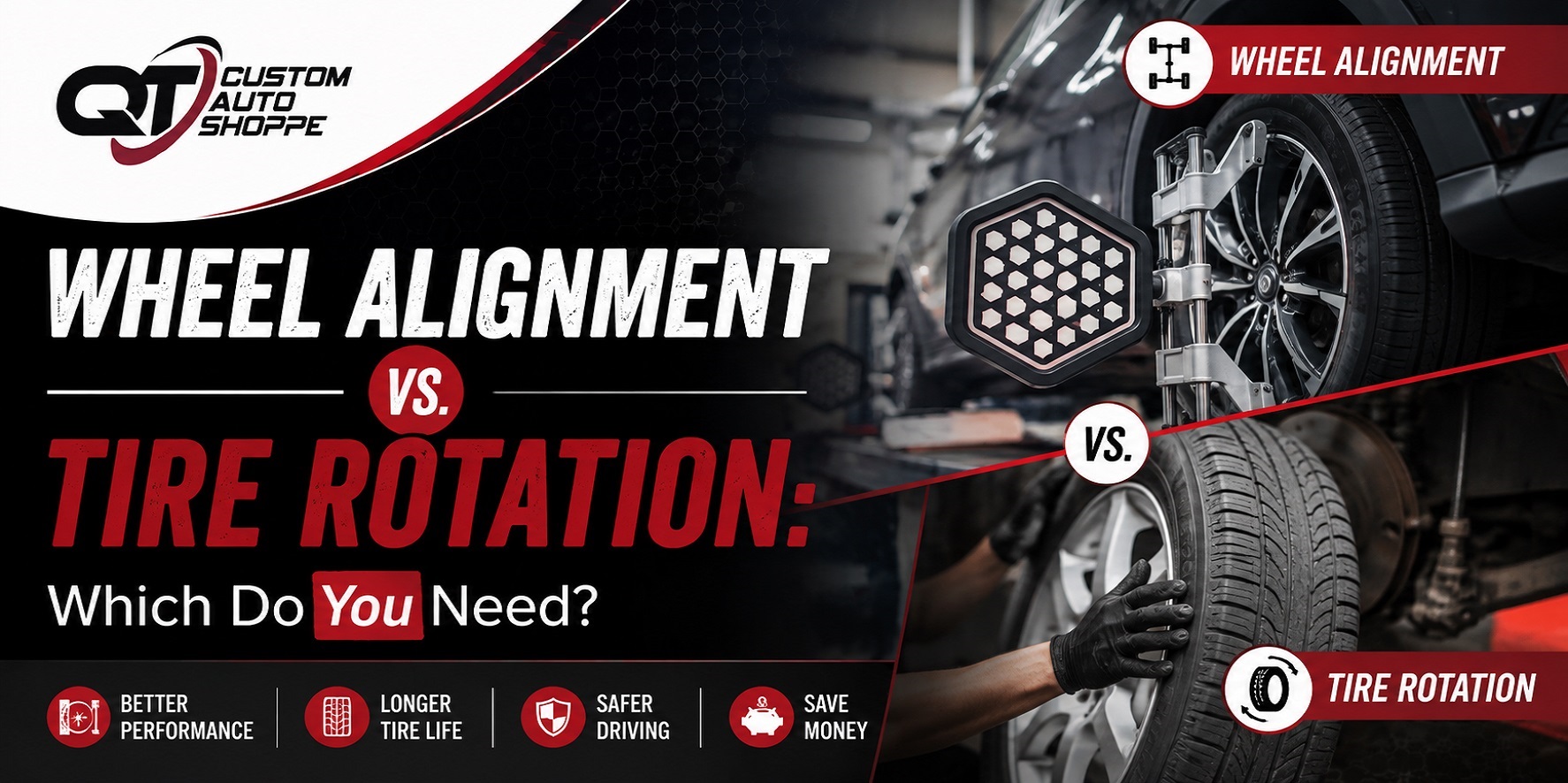
Wheel Alignment vs. Tire Rotation: Which Do You Need?
Your tires affect much more than just getting your vehicle from one place to another. They play an important role in handling, braking, fuel efficiency, and overall safety. That’s why it’s important to understand the difference between wheel alignment vs tire rotation. Although these services are often mentioned together, they solve different problems and are both essential for keeping your tires in good condition.
In this guide, we explain what each service does, when you might need it, and the warning signs to look for so you can make the right maintenance decision.
What a Tire Rotation Actually Does
A tire rotation simply means moving each tire to a different position on your vehicle. This helps the tires wear more evenly because not every tire experiences the same amount of stress.
Most front tires wear faster because they handle steering, braking, and, on many vehicles, engine power. Rotating the tires at regular intervals spreads that wear across all four tires, helping them last longer and perform more consistently.
Benefits of Tire Rotation
- More even tread wear
- Longer tire life
- Better traction
- Improved handling
- A smoother, quieter ride
Most manufacturers recommend rotating your tires every 5,000 to 7,500 miles, but it’s always best to check your owner’s manual.
Why Tires Wear Unevenly in the First Place
It’s completely normal for tires to wear at different rates. Daily driving habits and road conditions all play a part.
Common causes include:
- Frequent braking
- Sharp turns
- Rough roads and potholes
- Incorrect tire pressure
- Front tires doing most of the steering work
Without regular rotations, one set of tires can wear out much sooner than the others.
What a Wheel Alignment Actually Does
A wheel alignment service adjusts your wheels to meet your vehicle manufacturer’s specifications. Instead of moving the tires around, it corrects the wheel angles to help your vehicle drive the way it was designed to.
When your alignment is correct, your vehicle tracks straight, the steering feels more responsive, and your tires wear more evenly. It can also improve fuel efficiency and make every drive more comfortable.
Alignment doesn’t only change after major repairs. Everyday driving can slowly affect it over time.
What Knocks Alignment Out of Spec
Several everyday situations can throw your alignment off, including:
- Hitting potholes
- Bumping into curbs
- Driving on rough roads
- Minor accidents
- Worn suspension parts
Even if you don’t notice an immediate problem, these issues can gradually affect how your vehicle handles.
Wheel Alignment vs Tire Rotation: Side by Side Comparison
| Tire Rotation | Wheel Alignment |
|---|---|
| Moves tires to different positions | Adjusts wheel angles |
| Promotes even tread wear | Improves steering and handling |
| Helps extend tire life | Prevents uneven tire wear |
| Recommended every 5,000 to 7,500 miles | Performed when needed or when symptoms appear |
| Doesn’t change wheel angles | Adjusts suspension geometry |
The truth is, it isn’t a matter of choosing one over the other. Wheel alignment and tire rotation work together to protect your tires, improve your driving experience, and help you avoid unnecessary replacement costs.
Signs You Need a Wheel Alignment
Your vehicle will usually give you a few warning signs when the alignment is off. Don’t ignore them, as they can lead to faster tire wear and poor handling.
Vehicle Pulls to One Side
If your car drifts left or right on a straight road, your alignment may need attention. It can also make steering feel less stable over time.
Uneven Tire Wear
When one side of the tire wears faster than the other, poor alignment is often the cause. Checking your tires regularly can help you catch the problem early.
Crooked Steering Wheel
A steering wheel that isn’t centered while driving straight is another common sign. Even if the vehicle drives normally, it’s worth having the alignment inspected.
Vibration While Driving
If you notice vibration through the steering wheel, it’s worth having your alignment checked. In some cases, it may also point to other tire or suspension issues.
After Hitting a Pothole or Curb
A hard impact can easily throw your wheels out of alignment, even if the damage isn’t immediately noticeable. Getting it checked sooner can help prevent uneven tire wear.
Signs You Need a Tire Rotation
Rotating your tires at the right time helps them wear more evenly and last longer.
Watch for these signs:
- Uneven tread wear between the front and rear tires
- Your vehicle has reached its recommended service interval
- Increased road noise
- Reduced traction, especially in wet conditions
- It’s time for your regular oil change
How Frequently Should You Rotate Tires?
For most vehicles, tire rotation is recommended every 5,000 to 7,500 miles. Following your manufacturer’s maintenance schedule is the best way to keep your tires wearing evenly.
How Frequently Should You Get an Alignment?
Unlike rotations, wheel alignments don’t follow a set mileage schedule.
It’s a good idea to have your alignment checked if:
- Your vehicle pulls to one side
- You notice uneven tire wear
- You install new tires
- You hit a pothole or curb
- Steering doesn’t feel quite right
Many drivers schedule wheel alignment and tire rotation together during routine maintenance.
What Happens If You Skip These Services?
Putting off tire maintenance can lead to:
- Faster tire wear
- Poor fuel economy
- Reduced traction
- Less responsive steering
- Earlier tire replacement
Keeping up with routine maintenance costs far less than replacing tires before their time.
The Role of Tire Pressure and Balancing
Rotations and alignments are important, but they’re only part of proper tire maintenance. Proper tire pressure and regular balancing also help improve ride quality and extend tire life.
If you’re thinking about upgrading your vehicle, Quality Tire also offers custom rims and tires in Woodbridge, VA, to match your style and driving needs.
A Simple Way to Make the Right Call
If you’ve reached the recommended mileage and your tires are wearing evenly, a rotation is probably all you need.
If your vehicle pulls to one side, your steering wheel feels off-center, or your tires are wearing unevenly, it’s time to have the alignment checked.
When you’re unsure, a professional inspection can quickly determine the right service.
Where To Go in Woodbridge for Help
Whether you need routine maintenance or you’ve started noticing steering or tire wear issues, the team at Quality Tire is here to help. They can inspect your vehicle and recommend the right solution to keep you driving safely.
Bottom Line
Knowing the difference between wheel alignment vs tire rotation can help you protect your tires, improve your vehicle’s performance, and avoid unnecessary repair costs. Regular maintenance today can save you money down the road.
Not sure whether your vehicle needs an alignment or a tire rotation? The team at Quality Tire can inspect your vehicle and recommend the right service. Call (703) 491-9005 today to schedule an appointment and keep your tires performing at their best.
Frequently Asked Questions
1. Is wheel alignment the same as tire rotation?
No. A tire rotation moves your tires to different positions, while a wheel alignment adjusts the wheel angles.
2. How often should I rotate my tires?
Most vehicles should have their tires rotated every 5,000 to 7,500 miles or as recommended by the manufacturer.
3. How do I know if I need a wheel alignment?
If your vehicle pulls to one side, your steering wheel is off-center, or your tires are wearing unevenly, it’s time for an alignment check.
4. Can bad alignment ruin new tires?
Yes. Even brand-new tires can wear out much faster if your wheels aren’t properly aligned.
5. Does tire rotation fix uneven tire wear?
Not usually. It helps prevent uneven wear going forward, but it can’t reverse wear that’s already been caused by poor alignment.
6. Should I get a wheel alignment after installing new tires?
Yes. It’s a smart idea because proper alignment helps your new tires wear evenly and last longer.
7. Can I drive with bad wheel alignment?
You can, but it’s best not to put it off. Driving with poor alignment can wear out your tires faster and affect how your vehicle handles.
8. Is wheel alignment included with tire rotation?
No. They’re separate services, although many drivers choose to have both done during the same visit.